In my last post I mentioned an “Adirondack Lean To”. I assumed everyone knows what I’m talking about. They don’t. Time to add a little background info.
Below is a photo of an Adirondack Lean To that’s in the actual Adirondacks. It’s from an article instructing on Lean To etiquette. I haven’t been to this location but there are hundreds that look just like this. This lean to is in very good shape, it was probably recently “refreshed”.


By the way, etiquette is a big deal in the hinterland in general and lean tos in specific. It’s pretty easy; don’t be a fuckin’ animal! If you’re going to be a pain in the ass, stay in the city where you belong. Nature is unforgiving. Out there, it behooves everyone to behave intelligently and avoid messing up what might be lifesaving shelter.
A lean to is a log cabin adjacent contraption. It has only three walls and the firepit is outside the structure. Shockingly, it works. The fire radiates warmth (and hopefully not too much smoke) into the structure. It’s caveman level basic. No chimney. No windows. No plumbing. No electricity.
Despite (because of?) their crude nature, they’re pretty pleasant. You’re sheltered from rain, snow, and most wind. When it’s cold out it’s warmer than a tent. When it’s hot out it’s cooler than a tent. It’s not as weather resistant as a cabin but it’s not as stuffy either. The view is almost always awesome.
A lean to is specifically NOT a cabin! Remote forest cabins generate complications; first from the crude construction (and low budget) and second from being abandoned months at a time. A lean to avoids these issues by being too simple to host them.
For example, lean tos usually just have rocks as a foundation. That’s substandard for a four walled structure but “good enough” for a lean to.
Time for a digression about people and remote cabins/lean tos. (I’m talking about true wilderness and not some dude’s summer home near a suburban park.)
You might think a cabin is more secure to hold your stuff (assuming it’s your cabin) but many remote cabins are left unlocked. Part of this is simple kindness and safety. Shelter is important! You don’t want to find the corpse of some dude of who died of hypothermia just outside a locked a cabin’s door. Part of this is to spare damage, a dude who’s freezing to death will feel justified breaking into your shelter with his axe. He might feel bad about the damage but if shit gets real a locked door is just a logistics issue. On a high level of morality, some cabin owners hope people passing by will use the structure without damaging it… which happens more than you’d think. On a low level of morality, there’s usually nothing in a cabin worth stealing because there is no law enforcement out there.
Depending on the situation, it might be legal (even expected) to wander into a cabin and stay overnight. Staying in a lean to is much less invasive. They’re more reasonably accepted as “available”. Regardless, God is watching. Don’t be an ass!
Note: When you use any remote structure (legally!) act like you’ve got class. It ain’t a hotel and you ain’t a paying customer, you’re a guest! Leave the place tidy. Don’t leave behind food that’ll attract critters unless it’s dry goods in a tough sealed box meant to be in a place like that.
Never leave until the wood box is well stocked for the next person. Leave behind at least as much wood as you found there (ideally more). If you burn all the wood and the next person freezes or has to gather wood in a rainstorm, you’re going to hell.
Generations of fuckwits may have carved their names in the table. Be better than that. If you feel like carving your name on a wall, punch yourself in the balls until the desire fades.
If there’s a logbook, write in it how much you like the place. If there’s an address of the people/organization that supports the structure, shoot them a donation when you get back to town.
Vagrants and jackwits may wander around cities but in the hinterland you should always be on your best behavior.
Here are some more cabin logistics that lean tos avoid:
Cabins need a heavy (and expensive) woodstove hauled to the location. When the roof leaks (and the roof always leaks) the stove will rust. Meanwhile, a family of raccoons will move into the chimney. Plus some folks honestly don’t know how to operate things like a damper.
Cabins need windows. Windows means glass. The windows will eventually be broken glass.
Animals absolutely love to wreck cabins. A cabin left alone too long will eventually be trashed by six squirrels, two porcupines, and a moose. I don’t know why, but it happens. A lean to, on the other hand, won’t suffer so much. Critters walk in, sniff around, and (usually) leave. Wasps and bees and bats and such are more likely take up residence in a cabin than a lean to. They’re also universally easier to evict from a lean to. Cabins can get supremely funky but ten minutes with a broom will adequately clean most lean tos. Now that I think about it, human squatters are also less likely to occupy a lean to.
Removing the “completion” of a cabin changes the equation. The missing wall creates something that a cabin is not.
Why the Adirondacks? Originally, Adirondack guides constructed lean tos. It was their job. Hunters appreciated a warm dry place to sleep. Probably trappers used/built them too. They were generally constructed with materials found within a few hundred yards of the build site. The CCC also built a bunch in the 1930’s, many replacing decrepit pre-existing shelters.
They became tradition. People love them. I love them! People volunteer to maintain them. There are a couple hundred publicly available lean tos scattered around the Adirondacks.
Lean tos aren’t unique to the Adirondacks. It’s an idea old as time. Creating handy safe spots in rugged places is “Human 101”. Folks have made rock shelters, emergency mountain retreats, lean tos, fishing camps, line shelters, sheep wagons, helispots, warming shelters, private remote cabins; probably they made such things even in the stone age. Some Norwegian things called a “Lavvu” look like lean tos but not all of them. I’m not sure how that translates. I’ve seen the most “typical” lean tos in the Adirondacks and at Boy Scout events in Appalachia (back when there were Boy Scouts). But I’ve also seen them at (US) National Parks, National Forests, State Forests, ghost towns, old logging camps, and even along snowmobile trails. If you look around, you’ll find lean tos everywhere.
Here’s a link where you can buy a reprint of the historic plan for an Adirondack lean to. It’s from the CCC in the 1930’s.
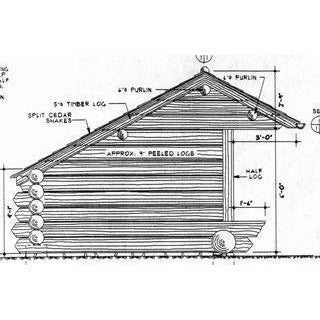

Here’s another photo of a current lean. This one is in the Adirondacks. Article link here.


While “Adirondack Lean To” is a fairly specific design, there’s a thousand variants. I’ve been to this lean to but I camped elsewhere. (I snagged the photo from the internet.) This one is not in the Adirondacks. It can only be accessed by boat.


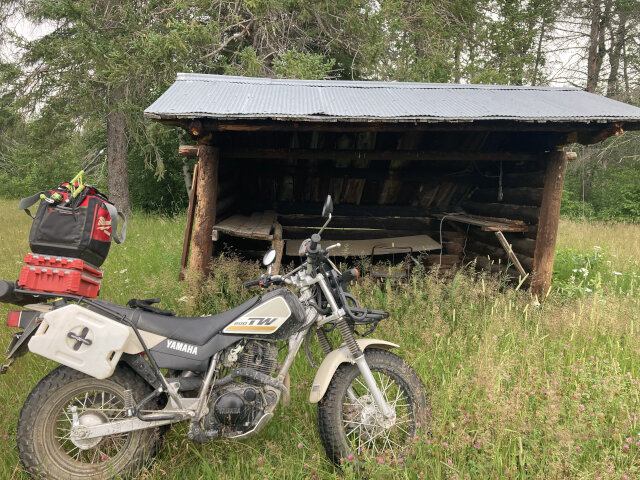
Here’s a lean to I found while on a motorcycle excursion. It was a little sketchy. That’s life. Things left in the woods need periodic maintenance or they turn back into the woods.
Here’s a video of Kent Survival making his own lean to on (presumably) his own land. I can’t help but mock his pretentious ear gauges but he makes a very fine lean to. Excellent workmanship! I think he’s in the UK.

Here’s a few videos from Survival Russia. He followed historical precedent as he read from Horace Kephart’s Book Camping & Woodcraft. That’s a book from around 1906-ish. He calls it an Appalachian Shelter. He built his version in Siberia.


Now you know.